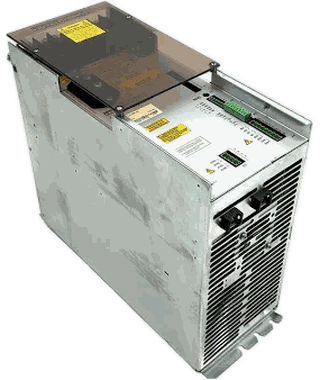
Litco inventory record match
TVD1 overview
TVD1 belongs to the TVD Power Supply Modules platform. TVD supply family represented across multiple Litco inventory records; verify current stock.
Legacy power supplies matched by series, continuous power, regenerated energy handling, mains input and connected drive bus.
The base model identifies a useful frame or product group, but it is not enough by itself to select a replacement. Electrical design, feedback, mechanical interface, brake, cooling, firmware and installed options can all change inside one model group.
Send the full nameplate plus photos of the unit and connections. Litco can route the request toward a verified inventory check, repair evaluation, exchange or a technical follow-up.
Inventory records and exact codes
88matching records
5exact designations
46quantity previously recorded
Inventory records are a starting point, not a live-stock promise. Litco verifies the complete code, physical unit, condition and current stock before quoting.
Exact part-number records
Select a complete designation to review its configuration and request verification of today’s stock.
TVD1 power-supply identification notes
TVD1 is a direct-mains supply module for modular drive systems. The cited TVD1.3 manual documents three-phase 380–480 V operation.
| Power code 08 | 7.5 kW continuous DC-bus power in the cited manual |
|---|
| Power code 15 | 15 kW continuous DC-bus power in the cited manual |
|---|
| Bus-voltage code 03 | 320 V |
|---|
| Associated system parts | NAM mains modules, KD chokes, GLD smoothing chokes and TBM auxiliary bleeders |
|---|
Compatibility checkpoint: Distinguish TVD1.2 from TVD1.3 and match mains equipment, choke, bus power and braking-energy requirements. TVD should not be described as regenerative.
View manual reference: TVD1.3 Power Supply Module - Applications Manual →Related selection and system guides
Compare TVD1 with the surrounding product family and installed system before planning a substitute.
Repair, testing and exchange
Use one intake for a repair evaluation, exchange request or replacement search. Describe the failure, capture any display or drive fault, identify the machine and axis, and preserve parameters or application data before removing control hardware.